
Mycotoxins have always been a concern in animal nutrition — but the risk profile is changing. Climate variability is reshaping how and where fungal contamination develops, creating challenges that traditional management strategies weren’t designed to handle. Combined contamination from multiple mycotoxin types is now the norm rather than the exception, and even low-level chronic exposure is increasingly recognised as a significant drag on animal health and performance.
Agrihealth is pleased to offer MMIS from Olmix — a patented, science-backed mycotoxin management solution for modern conditions.
The Current Mycotoxin Landscape
Mycotoxins are toxic compounds produced by fungi — primarily Fusarium species in the field and Aspergillus and Penicillium after harvest. The most common in European cereals are deoxynivalenol (DON), zearalenone (ZEN), T-2/HT-2 toxins, and fumonisins (FUM).
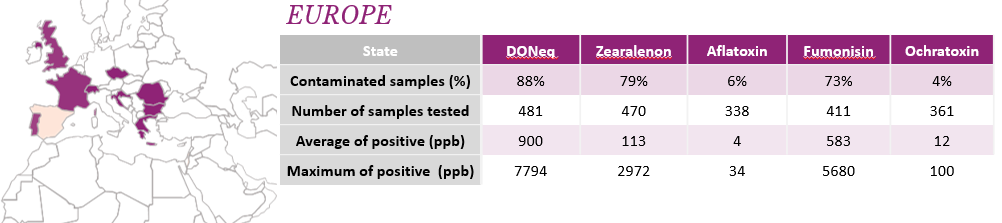
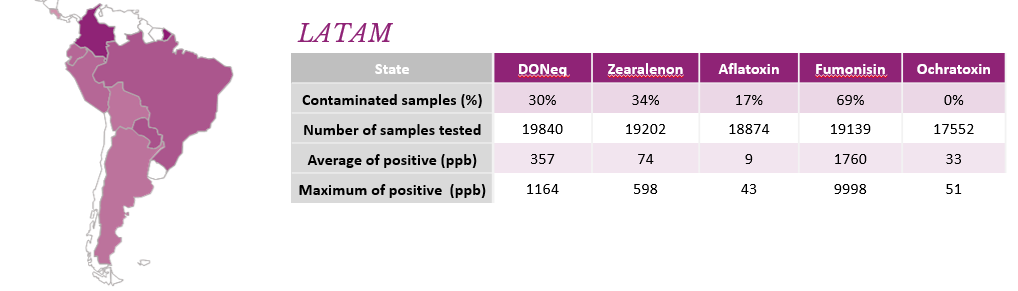
Recent European data confirm that contamination levels remain high and are increasing in some areas. DON is detected in 88% of European cereal samples, with ZEN present in 79% — driven largely by Fusarium graminearum in maize systems. In Latin America, a major maize-exporting region, fumonisin prevalence runs at 69% of samples. Because these raw materials flow into European animal feed, the contamination risk travels with them.
The key challenge today is polycontamination — the presence of multiple mycotoxins simultaneously. The combined effect of DON and FUM, for example, is greater than either alone. Together they damage tight junctions in the intestine, disrupt cell membrane integrity, increase intestinal permeability, and trigger inflammatory responses — all of which compromise nutrient absorption, gut health, and immune defence. Critically, these effects occur at levels that fall within current regulatory thresholds.
Why Standard Binders Aren’t Always Enough
Traditional mycotoxin binders work well for polar, well-studied mycotoxins like aflatoxins. But larger, more complex molecules such as DON and fumonisins are poorly adsorbed by standard clays. An effective solution needs to address the full spectrum.
MMIS takes a different approach.
How MMIS Works
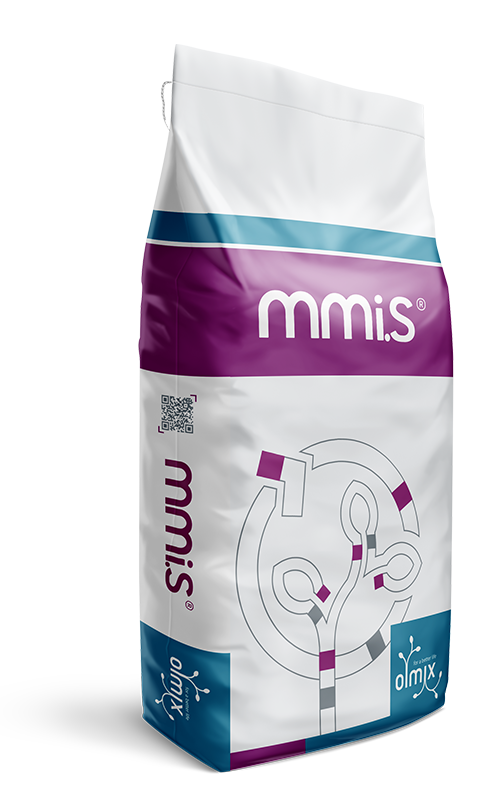
MMIS is built around Algoclay — a patented hybrid material that combines clay with seaweed extracts. The seaweed component increases the interlayer spacing of the clay by up to tenfold, dramatically expanding the adsorptive surface area and the range of mycotoxins it can bind. This structural enhancement allows MMIS to capture large, complex mycotoxin molecules that standard binders miss, while also preventing desorption — the process by which bound mycotoxins can be released again in the digestive tract.
The full MMIS formulation also includes yeast cell walls, montmorillonite, and seaweed extracts working together to limit both intestinal absorption of mycotoxins and their direct contact with the gut epithelium.
The technology is supported by scientific studies and in-field commercial trials, demonstrating an average return on investment of 4:1.
Monitoring Tools to Support Your Programme
Effective mycotoxin management isn’t just about the binder. Olmix provides two practical tools to help at farm and feed mill level:
Myco’Evaluator — a free online risk assessment tool that calculates the probability of significant mycotoxin contamination based on farm-specific risk factors including agricultural practices, storage conditions, and animal health indicators. A useful first step before committing to full laboratory analysis.
Myco’Screen — personalised lab reports developed by Olmix mycotoxin specialists. Using LC-MS/MS chromatographic analysis, these reports provide detailed interpretation tailored to the specific feed type, species, and production stage involved — moving beyond raw numbers to actionable guidance.
A Complete Approach
Mycotoxin risk can’t be managed by product alone. The most robust programmes combine a wide-spectrum binder like MMIS with ongoing monitoring, good raw material sourcing practices, and regular analysis — particularly for farms using home-grown cereals or importing maize-based ingredients.
Please refer to product documentation for specific usage and safety information. Contact your Agrihealth technical representative for further guidance.